
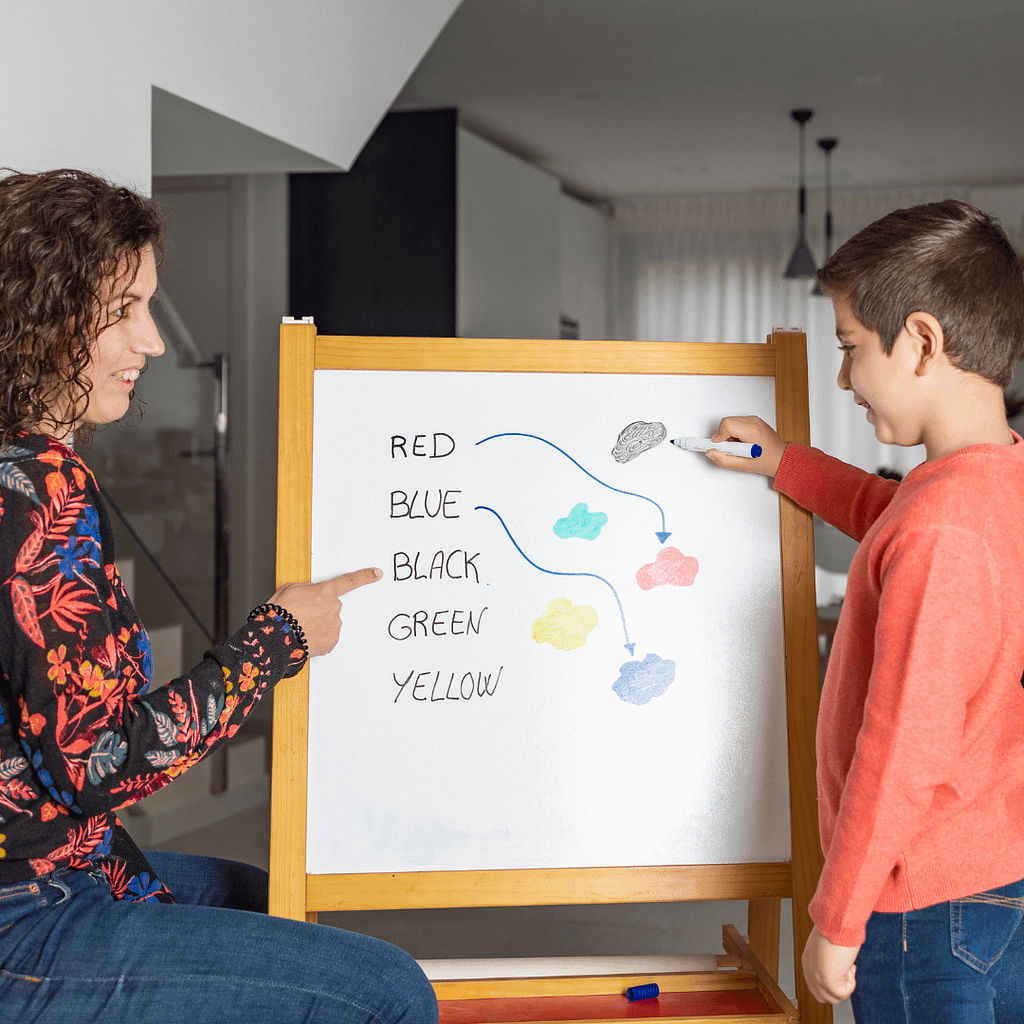
Learning English from an early age brings countless benefits to children's development. In addition to facilitating language acquisition, this practice contributes to improving cognitive skills, improving memory and concentration, and expanding future opportunities, both academic and professional.
The importance of learning English in childhood
Studies have shown that learning a second language in childhood not only improves fluency, but also strengthens other areas of development. A study conducted by Joshua Hartshorne, a professor of psychology at Boston College, in collaboration with Steven Pinker, a psychologist at Harvard University, analyzed the relationship between age and the ability to learn a second language. The study, which involved around 670,000 participants, showed that the ability to learn grammar of a new language is quite high until approximately the age of 17, gradually decreasing after that age. These data reinforce the importance of starting to learn English as early as possible.
How to encourage English learning at home
Parents play a key role in exposing their children to the language. Small changes in routine can make English a natural part of everyday life. Here are some effective strategies:
- Create a bilingual routine: Introducing simple expressions in English at different times of the day, such as “Good morning!” when waking up, “Let's go!” when leaving the house or “Time to eat!” at mealtimes, helps the child to associate the language naturally.
- Exposure to English content: Watching cartoons and movies in English can make a big difference. Programs like Peppa Pig and Bluey use simple and repetitive language, which makes it easier to understand. In addition, children's songs in English, such as the playlists from Super Simple Songs on YouTube and Spotify, are an excellent way to reinforce the language.
- Reading in English: Swapping your bedtime story in Portuguese for one in English is an effective strategy. Books like The Very Hungry Caterpillar and those in Julia Donaldson's collection are great options to start this habit.
- Jokes in English: Children learn best through play. Games like Simon Says, Treasure Hunts (treasure hunt) or small theater performances and role plays help to reinforce vocabulary and language structure in a fun way.
- Set an example: Children learn by imitation. If parents show interest in English and use the language in their daily lives, their children tend to follow this behavior spontaneously.
Long-term results
Early exposure to English has a significant impact on children’s academic performance and confidence. At Fun Languages Almada, we support students from the age of 3 and have observed much faster language development among those who are exposed to the language from an early age. Students who begin learning English at an early age generally achieve higher scores in proficiency certification exams, such as the Cambridge First Certificate (FCE) and the Cambridge Advanced Exam (CAE).
Implementing some of these strategies at home can make English a natural part of your child’s life. The earlier your child feels comfortable with the language, the easier it will be for them to use it later on, whether at school, when traveling or in the workplace.